
Shepherd's Heart Counseling
Guide for Parents

Parent coaching or counseling: how to choose.

You know something needs to change at home. What's less clear is what kind of help to ask for. Shepherd's Heart offers several formats that can look similar from the outside: parent coaching, parent counseling, behavioral coaching, and psychotherapy. This guide explains the difference in plain terms, how to tell which one fits, and when it makes sense to use more than one.

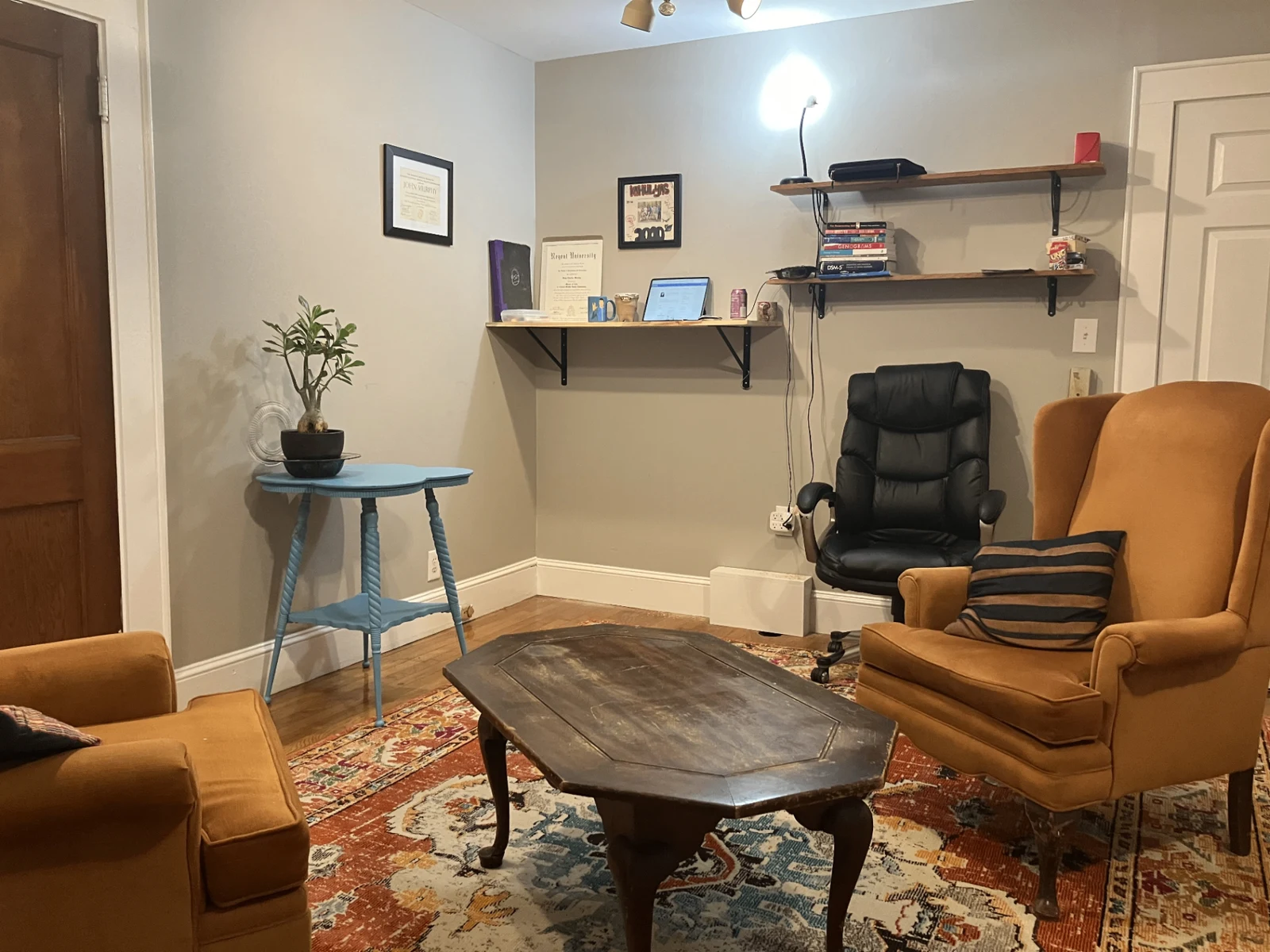
The Siler City counseling office, with two mustard-yellow armchairs around a wooden coffee table.

The short version.

Coaching is about what you do at home this week. Counseling is about what's going on inside you. Behavioral coaching targets one specific behavior. Psychotherapy asks why a pattern exists in the first place. Same clinician, same office, different work. John is direct about which one you're in at any given point, and the plan can shift as you go.


Parent coaching: strategy for the household.

Parent coaching is skills-and-strategy work. The household is the client, there's no diagnosis, and sessions are directive on purpose. A 50-minute session typically opens with a short debrief on what you tried, moves into working on one or two behaviors or transitions, and ends with specific homework, including the exact language to use. It fits a parent who is basically functioning but has run out of tactics. Parent coaching typically runs six to twelve sessions.

Parent counseling: therapy for you.

Parent counseling treats you as the client. It's slower, deeper work on your own history, anxiety or depression, grief, the way you were parented, or a co-parenting relationship under strain. It's the better fit when the question isn't how to handle your child, but why certain moments with your child hit you so hard. Weekly sessions are typical at first, moving to every other week as things stabilize.

Signs counseling should come first.

Coaching can't work if the tank is empty. If what's driving the trouble at home is your own depression, unresolved trauma, panic, grief, or a marriage in real trouble, strategies tend to fall apart because you don't have the capacity to carry them out. That isn't a moral failure; it's a scope issue. In that case, parent counseling is usually the right place to start, and coaching can be added once you have more bandwidth. If the marriage itself needs couples work, John will say so and point you toward a licensed marriage and family therapist. If yelling is part of the picture, the parent anger page may help you sort out what's underneath.

Behavioral coaching and psychotherapy.

Behavioral coaching is the narrowest format: one behavior, one goal, a plan you can run, usually over four to eight sessions. It suits things like homework avoidance or a morning routine that collapses every day. Psychotherapy sits at the other end. It's longer, open-ended work for adults who want to understand where a pattern comes from, not just manage it.

Doing two at once.

Coaching and counseling can run in parallel: one for the household, one for the parent. You might start with coaching, discover the tactics keep failing because you're depleted, and move to counseling. Or you might start with counseling and add coaching once you have the bandwidth to try new things at home. Either path is fine.

Insurance and cost.

Fees are the same across these formats: $195 for the 90-minute intake and $155 per 50-minute session. Insurance is where they can differ. Because coaching doesn't require a diagnosis, insurance may or may not apply to it, while counseling may involve a diagnosis when you use insurance. These details are walked through at intake, and the fees and insurance page covers the basics.

If you're ready to look at the format of the help, see parent coaching or parent counseling. Not sure where to start? Request a free 15-minute consultation and we'll figure it out together.

FAQ

Common questions.

Can I switch formats partway through?

Yes. The plan follows what's happening. Moving from coaching to counseling, or adding one to the other, is a normal adjustment rather than a fresh start.

Does my child need to come?

Not for parent coaching or parent counseling. The work is with you. Occasionally a child or teen joins a session for a specific purpose, like watching an interaction directly or a repair conversation.

What if I'm not sure I need help for myself?

That's a fair place to be, and starting with coaching is reasonable. If it turns out your own stress, history, or mood is getting in the way of the plan, John will say so directly and talk through adding counseling.

How do I know which one to ask for?

You don't have to decide alone. Describe what's happening during the free 15-minute consultation, and John will tell you which format he'd suggest and why.

Related services

How this work usually gets done.

Next step

Ready to try something that works?

A free 15-minute consultation. Send a request and John will get back to you with times that actually work — no pressure, no forms up front.

Request a Free Consultation