
Teen Anxiety

The anxiety your teen won't talk about.

Your teen isn't telling you they're anxious. They're telling you school is stupid, their stomach hurts, they don't want to go to the thing, everyone is annoying, and to leave them alone. From the outside it can look like attitude, laziness, or a personality change. Underneath, a lot of it is fear they don't have language for and won't say out loud — especially not to a parent.

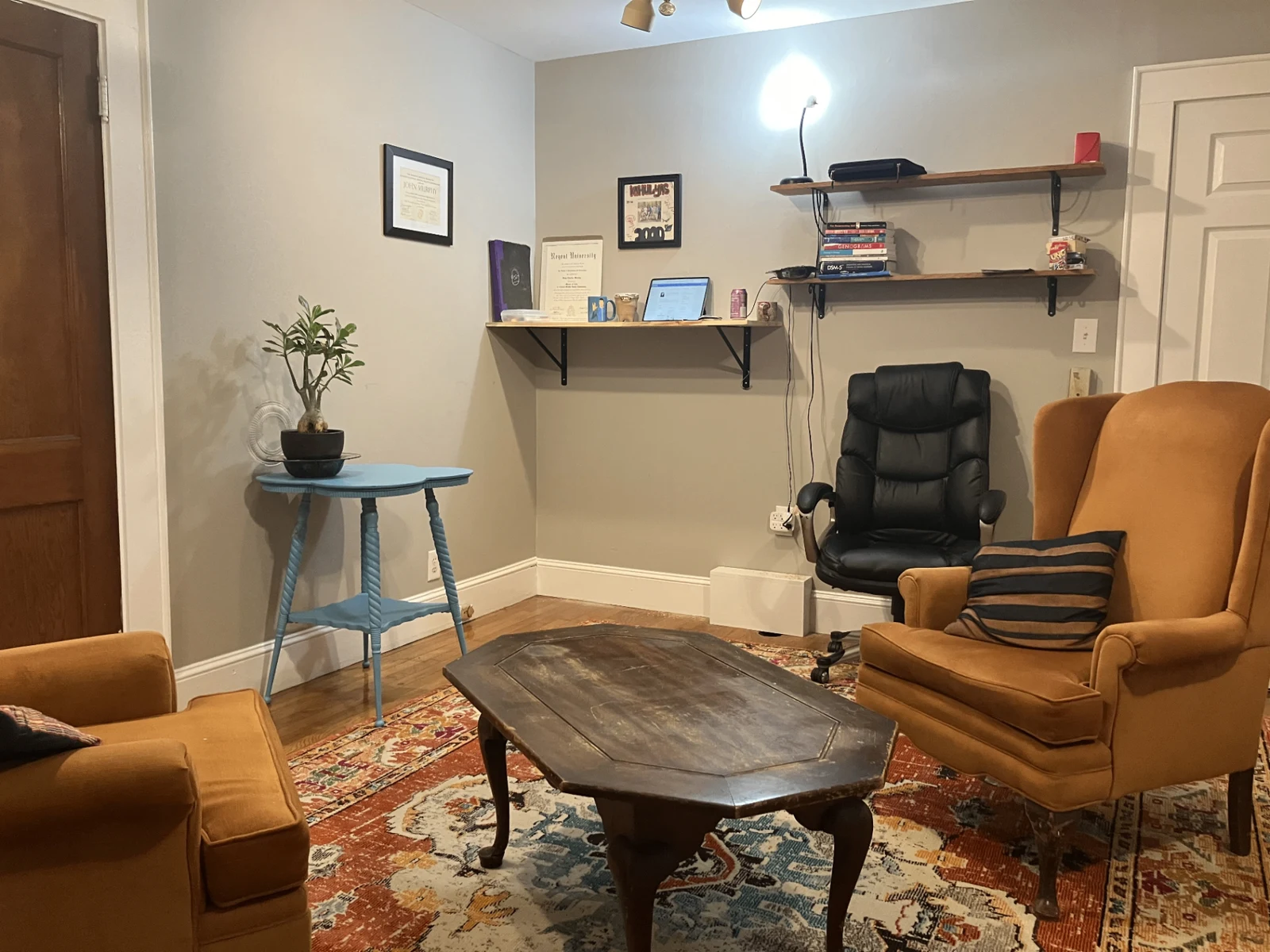
A calm, warmly lit office with two chairs set for conversation.

How anxiety hides in adolescents.

Teens rarely walk in and say 'I'm anxious.' What you see instead is irritability, withdrawal, sudden avoidance of things they used to do, over-preparation followed by shutdown, physical complaints that don't match a medical cause, sleep problems, or a shift in who they'll let close. Anger and anxiety look almost the same at 15. Both are the nervous system saying this situation is not safe. Anger points it outward — snapping at you, slamming a door. Anxiety points it inward — dread, avoidance, physical symptoms. Many teens do both, sometimes in the same afternoon. If your kid used to be steady and is suddenly not, anxiety is a likelier explanation than a bad personality.


Why reassurance backfires.

The natural parenting move is to reassure. 'You'll be fine. Everyone else is nervous too. You've done this a hundred times.' It feels like love, and short-term it can help the moment pass. Long-term it teaches the anxious brain that it needed a parent to steady it, and the anxiety comes back next time bigger. What works better is acknowledging that this feels genuinely hard for them and staying calm and unimpressed at the same time — the message is 'I see this is uncomfortable and I still expect you to walk into it.' That combination is harder than it sounds. A lot of the parent-side work in teen anxiety is learning to hold it.

School avoidance and how the cycle builds.

School refusal almost never starts as refusal. It starts as one anxious morning, an accommodation ('okay, stay home today'), and relief. The brain files it: 'staying home makes this go away.' The next anxious morning gets a little bigger. Within weeks a kid who used to go to school every day is missing two or three days a week and the family is fighting about it every morning. The way out is unglamorous. It usually involves getting the teen back into school in graduated, deliberate steps — sometimes partial days first, sometimes a specific class first — with the parents and (when possible) the school on the same plan. We do not push a teen back into a situation that's genuinely unsafe. We do push against the avoidance itself, because avoidance is what feeds the anxiety.

What a teen session actually looks like.

First meeting we spend some of it with you and some of it alone with your teen. After that, most sessions are just the teen. We talk. We look at what's happening in their week, what the anxiety is protecting against, and what they're avoiding. When it's useful we bring in specific tools — how to breathe when the panic starts, how to plan for the thing they're dreading, how to notice a thought without believing it. When trauma is under the anxiety, we may use EMDR; I'm trained in EMDR and use it when appropriate. Most teens loosen up faster than their parents expect once they realise the session isn't going to be a lecture and isn't going to be reported home in detail. That's important to understand as a parent, and it's the next section.

Confidentiality — what it does and doesn't mean.

Under North Carolina law, minors don't have full confidentiality from their parents in the way an adult client does. As the parent you have a legal right to information about your child's care. In practice, I don't run therapy that way, because a teen who thinks everything they say is going home will not tell me anything useful. What I actually do: I tell the teen at the start what I will and won't share. In general, day-to-day content stays between us. Themes, direction, and how they're doing overall — I share with you. Safety issues — suicidal thinking, self-harm, someone hurting them, plans to hurt someone else — I share with you every time, and we handle them together. I explain this to your teen in front of you at the first meeting so nobody is guessing. This is one of the most common places therapy with teens goes wrong, and I'd rather over-explain it than have you find out mid-treatment.

How parents stay involved without taking over.

You are not sidelined. In teen work I usually meet with parents periodically — sometimes every few sessions, sometimes at agreed check-ins — to talk about direction and what you can do at home. Your teen usually knows about these meetings; it isn't a back channel. What we don't do is treat you like the client's manager. The teen is the client. Your job in this work is to be a steady adult who can hear that your kid is struggling, not fix it in the car on the way home, and follow through on the pieces we agree you'll hold. That's a real job. It's also, for most parents, a relief — you get to stop being the therapist too. Intake is $195, sessions are $155. In-network with Aetna and Blue Cross Blue Shield of NC. All care is provided to clients physically located in North Carolina.

If you're ready to look at the format of the help, see teen counseling or parent coaching. Not sure where to start? Request a free 15-minute consultation and we'll figure it out together.

FAQ

Common questions.

Will you tell me what my teen says?

Not in detail. I'll share themes, direction, and how they're doing overall, and we'll meet periodically to talk about it. Safety issues — suicidal thinking, self-harm, abuse, plans to hurt someone else — I share with you every time. This is explained to your teen in front of you at the first meeting so everyone knows the rules going in.

What if my teen refuses to come?

That's normal and it's workable. Sometimes we start with a parent-only session and build a plan for how the first meeting gets framed. Sometimes we start with you doing the work and bring the teen in when they're ready. Dragging a teen into therapy under protest almost never works; we don't rely on it.

Does my teen need medication?

I don't prescribe and I don't have a fixed opinion. Medication for teen anxiety is a real option and it's a decision between you, your teen, and a physician or psychiatrist. If it looks like something we should be talking about, I'll say so, and I'll help you think about what to ask a prescriber. Therapy and medication are not either/or.

How do I know it's more than normal teen stress?

Duration, intensity, and function. If the mood or avoidance has lasted more than a few weeks, is out of proportion to what's actually going on, and is starting to keep your teen from doing things they need to do — school, sleep, friends, food — that's past normal. A 15-minute consultation is a low-stakes way to talk it through and figure out whether it's time to start.

Next step

Ready to try something that works?

A free 15-minute consultation. Send a request and John will get back to you with times that actually work — no pressure, no forms up front.