

NC Educators & State Employees

For the people holding everyone else's kids together.

Teachers, school counselors, bus drivers, front-office staff, social workers, juvenile-justice officers, group-home staff, youth-services workers — you are the calm adult in a room full of other people's kids all day. By the time you get home, you have almost nothing left for your own family. This page is written for you specifically. John has spent close to two decades working in and around North Carolina schools, juvenile justice, wilderness therapy, residential treatment, and in-home services, and Shepherd's Heart is in-network with Aetna and Blue Cross Blue Shield of North Carolina — the carriers many people in these jobs are on.

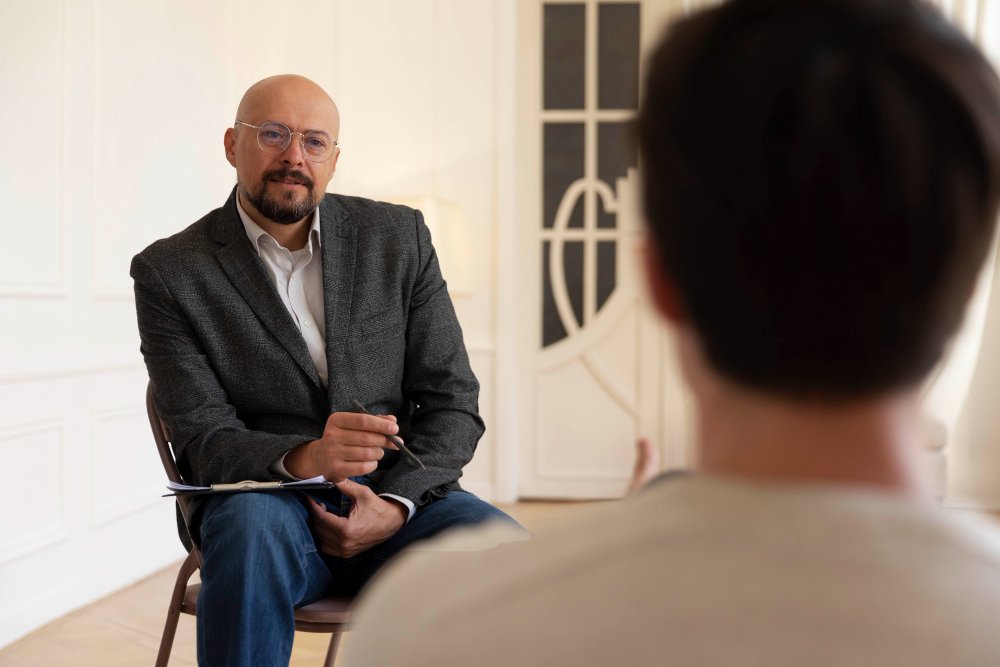
A quiet lamplit room at the end of a long day, a soft place to land.

Compassion fatigue is not the same as burnout.

Burnout is what happens when the load is too heavy for too long — you feel depleted, cynical, and less effective at the job. Compassion fatigue is a specific version of that, and it shows up in people whose work is holding other people's pain. You start bracing before a shift. You dream about the kids on your caseload. You stop being able to watch anything on TV with children in distress. You feel numb toward stories that would have gutted you five years ago. That numbness is not a character problem — it is your nervous system trying to protect you from a job that keeps asking it to feel too much. We treat that directly.

The 4 p.m. bind.

You spend eight hours regulating other people's kids. You are the safe adult, the calm voice, the person who does not yell. Then you get in the car and drive home to your own household, and you have used up the exact resource your family needs from you. Your patience is spent. Your capacity to hold one more feeling is at zero. Your kids get the version of you that everyone else got the good version of. Most of the guilt educators and youth-workers carry lives in that gap. Part of the work is redistributing what you spend during the day so there is something left at four o'clock — and letting go of the expectation that you should have infinite reserve.

Living and working in the same community.

Rural and small-town North Carolina has a specific concern that big-city therapists don't understand well: your students, your co-workers, and your own family run in the same grocery store and the same church parking lot. If you go to a therapist in your county, you may pass them at a football game two weeks later. That's a real reason people avoid getting help — and it's a real reason many educators here choose telehealth with a clinician outside their immediate community. We take that seriously. Confidentiality is discussed at intake in specific terms, not generalities, and we plan care with your professional life in mind.

Using your insurance.

Shepherd's Heart is in-network with Aetna and Blue Cross Blue Shield of North Carolina. Many North Carolina educators and state employees are covered through an Aetna-administered plan. Whether your specific plan covers therapy here — and what your copay would be — depends on your individual benefits, so bring your card and we'll verify your coverage before your first session rather than guess. This is an insurance relationship, not a state endorsement — the North Carolina state government does not endorse any particular therapist.

Secondary stress from working with youth in crisis.

People who work with kids in juvenile justice, residential care, DSS, foster support, or in-home services carry a specific weight. You have watched things you can't unwatch. You have sat with families in situations that no adult should be in. Secondary traumatic stress is a real clinical phenomenon and it does not go away with a weekend off. When trauma is part of the picture, EMDR is sometimes the right modality. John is trained in EMDR and uses it when it is clinically appropriate. Not everyone needs it. Some of the work is grief for the parts of the job that don't have a fix.

A practical word about scheduling.

Most of John's availability falls during the workday and school hours, and the last session of the day starts at 5 p.m. After-school appointments are the most requested slots on the calendar, so 4 p.m. and 5 p.m. tend to fill quickly — often with people who genuinely cannot come earlier. Friday availability is more limited. None of that means there is nothing for you; it means the useful move is to ask about availability early and be specific about what your schedule allows, rather than assuming nothing fits. Between telehealth, occasional openings during planning periods, and slots that open as schedules shift, there is usually more room than people expect once we talk about it.

How the work goes.

Sessions are available in person in Siler City or by telehealth anywhere in North Carolina — many people in these jobs choose telehealth for schedule flexibility and for the confidentiality reasons above. Consultation is 15 minutes and free. Intake is $195, sessions $155. Shepherd's Heart is in-network with Aetna and Blue Cross Blue Shield of North Carolina. We'll verify your specific benefits before your first session. Therapy is only available to clients physically located in North Carolina at the time of session.

If you're ready to look at the format of the help, see individual therapy or emdr therapy. Not sure where to start? Request a free 15-minute consultation and we'll figure it out together.

FAQ

Common questions.

Will my insurance cover this?

Shepherd's Heart is in-network with Aetna and Blue Cross Blue Shield of North Carolina, and many North Carolina educators and state employees are on Aetna-administered plans. Coverage and copays vary by individual plan, so we verify your benefits before your first session — you'll know what you owe before you owe it.

I'm worried about being seen. How private is this?

Very. Your record is confidential and it is not shared with your employer, your school district, DPI, or the state without your explicit written consent and a specific reason (e.g. a records request you initiate). Telehealth is available so you don't have to sit in a waiting room in your own community. We talk about confidentiality concretely at intake, not abstractly.

I'm not sure if this is burnout or something more. Is that okay to bring in?

Yes. Sorting that out is part of the intake. Burnout, compassion fatigue, secondary traumatic stress, depression, and anxiety can look similar from the outside and need different responses. You don't need a diagnosis to request a consultation — you need to be tired of feeling like this.

Can we do sessions during my planning period or after school?

Yes, within available hours. Many educators book late afternoon or early evening telehealth sessions on their own schedule. We'll find a time at consultation that doesn't require you to leave work early.

Next step

Ready to try something that works?

A free 15-minute consultation. Send a request and John will get back to you with times that actually work — no pressure, no forms up front.