
Shepherd's Heart Counseling
Young Adults

Therapy for young adults.

Becoming an adult rarely happens on schedule. You might be finishing school, starting a job, living at home again, or figuring out who you are apart from the family you grew up in. Shepherd's Heart works with young adults as well as teens and parents. This page explains what that work can look like, how confidentiality works for you as an adult, and what to know about location and telehealth.

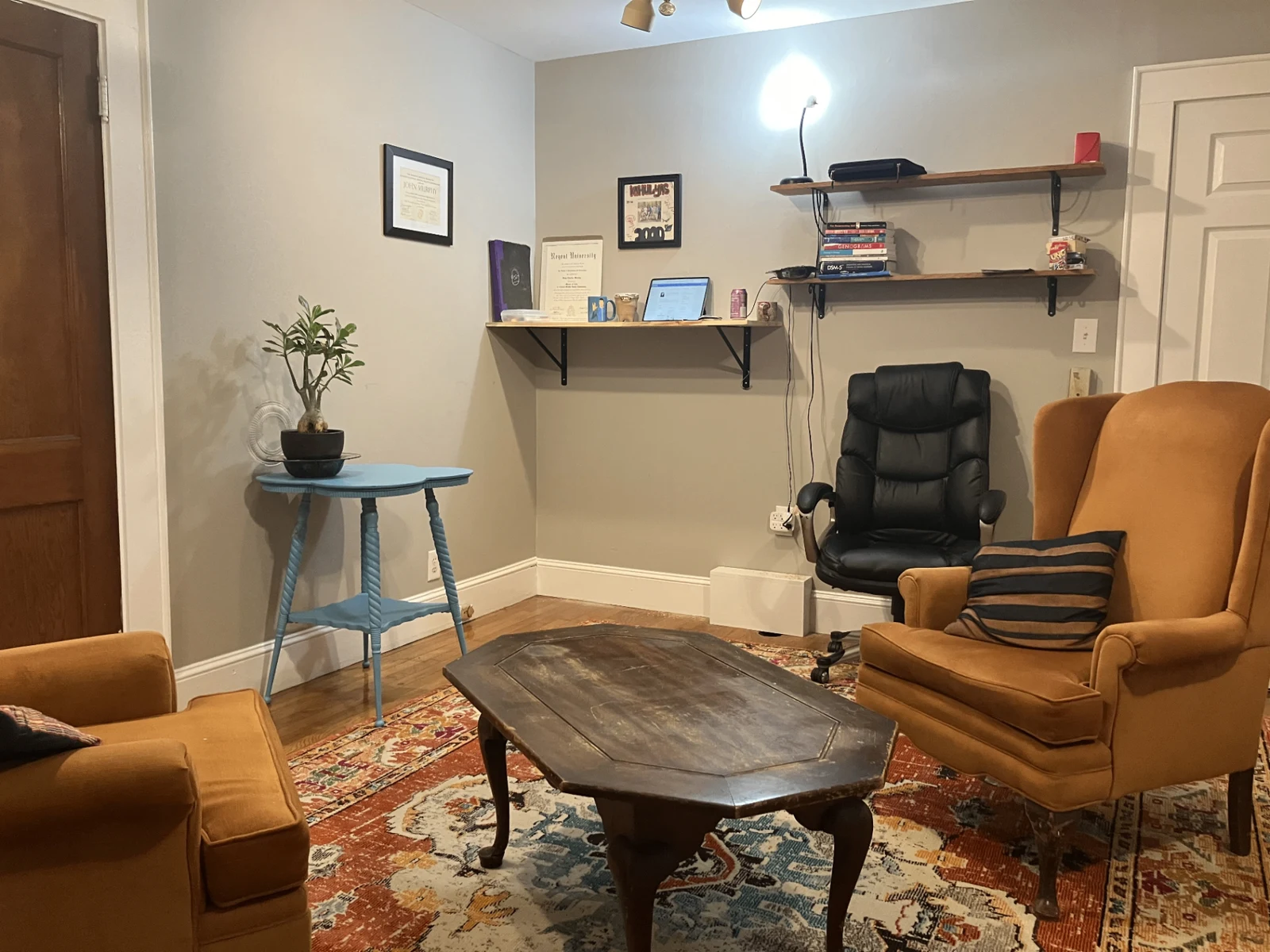
The Siler City counseling office, with two mustard-yellow armchairs around a wooden coffee table.

What the work can cover.

Individual therapy here covers what tends to show up in this stretch of life: anxiety, depression, a life transition that knocked you flat, a relationship, a career decision, grief, or unresolved trauma. Sometimes the issue is clear. Sometimes it's a vague sense that something isn't working and you can't name it yet. Both are good reasons to start. The individual therapy page explains the weekly format.


Your relationship with your parents.

Your relationship with the parents who raised you can be a focus of the work. That relationship changes in early adulthood. You may be negotiating independence while still living at home, carrying old conflicts into new terms, or trying to understand why certain family dynamics still get under your skin. Therapy can be a place to sort out what's yours to carry and what isn't.

Sometimes a joint conversation with a parent helps, and sometimes it doesn't. That's something to decide deliberately, on your terms, rather than something that happens by default.

Patterns from childhood.

Early adulthood is often when people first see their childhood clearly. Patterns that felt normal at home can look different once you're outside them. If you're working through difficult experiences from growing up, the page on childhood trauma in adults explains how that work is paced, and psychotherapy offers longer, deeper work for people who want to understand where a pattern comes from.

Confidentiality as an adult.

As an adult client, your record is confidential. It isn't shared with your family, your employer, or anyone else beyond the limited information an insurer needs for billing. If you're on a parent's insurance plan, the plan may send billing statements to the policyholder, so mention that at the consultation if privacy from family matters. The legal exceptions, such as imminent danger to yourself or someone else, are explained at intake in specific terms. If you want a parent involved in some way, that's your decision to make.

Telehealth and the North Carolina rule.

Sessions are available in person at the Siler City office or by secure telehealth anywhere in North Carolina. The catch is licensure: you must be physically in North Carolina at the time of each session. If you attend college out of state, John can't be your regular therapist while you're there; you'll need someone licensed in that state. If you're in North Carolina for school or work, video can make weekly sessions much easier to keep.

Methods that fit the problem.

The approach follows what you bring. Cognitive behavioral therapy helps with anxious thought loops and rumination, and the page on anxiety in adults goes deeper. Mindfulness and somatic grounding help when stress lives in your body. Psychodynamic work looks at relationship patterns and where they started. EMDR can help when a specific memory keeps intruding; John is trained in EMDR, not certified, and the EMDR therapy page explains how it works.

How to start.

Request a free 15-minute consultation and describe what's going on in a sentence or two. John responds himself and will tell you honestly whether he's the right fit. Questions about fees, insurance, and scheduling are answered in the FAQ.

If you're ready to look at the format of the help, see individual therapy or psychotherapy. Not sure where to start? Request a free 15-minute consultation and we'll figure it out together.

FAQ

Common questions.

Do I need my parents' permission to start?

No. As an adult, you can start therapy on your own, and your record is confidential within the legal limits explained at intake. Whether and how family is involved is up to you.

What if I'm away at college in another state?

Then John can't be your regular therapist while you're there, because licensure requires you to be physically in North Carolina during sessions. You'll need a therapist licensed in the state where you're living.

Can I do sessions from my car or my room?

Yes, as long as you're physically in North Carolina and the space is private, like a closed room or a parked car. Headphones help if other people are nearby.

Do I have to come every week?

Weekly is the default at the start, because it gives the work enough traction. Later, sessions often move to every other week as things stabilize.

Related services

How this work usually gets done.

Next step

Ready to try something that works?

A free 15-minute consultation. Send a request and John will get back to you with times that actually work — no pressure, no forms up front.

Request a Free Consultation